Blog Details
Home > Blog> Blog Details

Successful Surgeries
Doctors
Happy Patients
If you got any questions, please do not hesitate to send us a message. We reply within 24 hours.
The role of Rhinoplasty in enhancing facial balance
Introduction
The proportionality of the individual features usually determines facial balance, as opposed to the preeminence of one feature. The nose is centrally placed and it is vital in the creation of the whole balance of the face. Nose reshaping surgery, also known as Rhinoplasty, is performed extensively to perfect this balance in a medically correct and controlled way. It does not aim at producing a completely new outlook, but it aims at enriching natural proportions in a refined and organized manner.
,
Knowing the Facial Proportion and Nasal Structure.
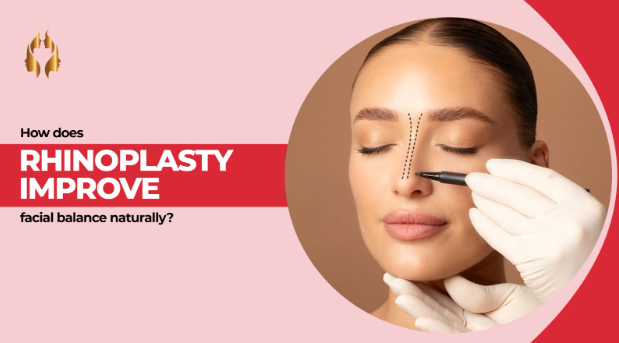
Generally it is observed that symmetry and proportion affect facial attractiveness. The nose should be in place with the forehead, chin, lips and cheekbones. The nasal form is out of proportion (e.g. a dorsal hump, bulbous tip or deviation) and thus is likely to disrupt the visual balance of the face. Rhinoplasty is done in order to rectify these imbalances without altering the natural identity of that person.
The facial thirds and nasal angles are some of the measures that are usually assessed when planning surgery. These parameters are applied to make sure that the change that is made is proportionate. Techniques used in this context are modified to preserve structural integrity and to provide refinement in the Indian context, where nasal anatomy tends to be thicker-skinned and has broader bases.
Surgical Procedure and Natural Results.
In contemporary practice of rhinoplasty, a conservative form is usually favored. It is determined that the slightest changes yield the most naturalistic effects. The bridge of the nose can be made straight, the tip refined, or the asymmetry can be made even without overreduction. Overcorrection is discouraged since it can create an artificial look or impairment.
Besides aesthetic gains, practical advantages are often realized. Other conditions like a deviated septum can be treated at the same surgery resulting in better airflow and breathing. This two-fold effect helps in not only physical comfort but also aesthetic improvement.
Healing and Long-term Stability.
The end result of rhinoplasty is not immediate. The swelling and small irregularities may last a few weeks or months and slowly disappear with time. We know that we must be patient, because the fine form will be seen in the healing. When done accurately, the outcomes are normally durable and firm.
Post-operative treatment is deemed to be critical in the result. Compliance with medical prescriptions, such as trauma prevention and inflammation control, promotes adequate healing. Skin type, surgical method, and personal healing are also factors that determine the duration of the outcomes.
Conclusion
Rhinoplasty can be best described as a way to promote facial balance as opposed to changing identity. Being done in a systematic and restrained manner, it enables the nose to blend in with the surrounding characteristics. The significance of realistic expectations and qualified surgical expertise is a critical factor. After all, naturalistic effects are acquired not by radical transformation, but by refinement, by refining by a certain percentage, by refining in a certain manner.
Copyright reserved @ 2023 Raj Cosmetic & Plastic Surgery Centre