Blog Details
Home > Blog> Blog Details

Successful Surgeries
Doctors
Happy Patients
If you got any questions, please do not hesitate to send us a message. We reply within 24 hours.
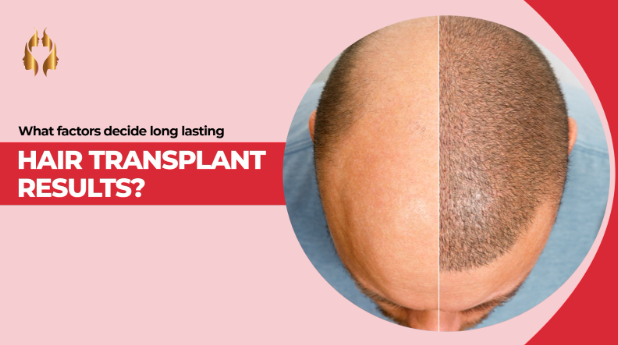
What Determines Long-term Hair Transplantation
Introduction
Hair transplant is now one of the most desired solutions to hair loss, especially in those men with pattern baldness. Although the process is being heavily marketed as permanent, the truth is not that simple. The procedure itself does not guarantee long-term outcomes but depends on various factors, such as biological, technical, and post-operative ones.
Donor Area Quality and Hair Characteristics.
The quality of the donor site that is usually on the back of the head or sides is critical in determining the success of a hair transplant. The follicles in this area are genetically resistant to loss of hair, thus they are chosen to be transplanted.
Should the area where the donor is taken not be dense or strong enough, the result will be diminished no matter what method is adopted. The thickness of hair, the texture and the pattern of growth also determine the appearance of the final result, whether it is natural and thick.
Surgical Procedure and Professionalism.
The art and practice of the surgeon is a determining factor. These include Follicular Unit Extraction (FUE), Follicular Unit Transplantation (FUT), which demand accuracy in harvesting and inserting grafts without causing harm to follicles.
Another important issue is hairline design. One of the biggest signs of an improperly performed transplant is an unnatural hairline. The angle, direction, and density of the implanted grafts should be similar to the natural hair growth patterns to give natural results. A lack of technique may result in poor growth, poor survival, or scarring.
Post-Operative Care and Compliance.
Post-surgical care is frequently ignored, but it is a key to graft survival. Patients are expected to be strict when it comes to washing, medication, and physical activities. Any laxity in the healing processes can result in infection or loss of the graft.
Hair shedding after transplantation is normal and after a few months, hair grows again. It takes time and one should be patient because the visible results may take six to twelve months to realize.
Genetic Factor and Continuous Hair Loss.
Hair transplantation is not a means of preventing the process of hair loss. Transplanted follicles are resistant, however, the existing native hair can still thin over time. It may cause uneven density when not handled well.
Finasteride or minoxidil are the medical interventions that are frequently prescribed to reduce the further loss of hair and ensure the overall coverage of the scalp. Failure to consider this aspect results in unrealistic expectations of permanence.
Lifestyle and Long-Term Maintenance.
Other factors that affect hair growth and longevity are diet, stress and general health. Unhealthy lifestyle may adversely affect the outcomes, even following a successful operation.
A long-term management plan is viewed as more effective in the Indian population with early hair loss becoming widespread because of stress and environmental factors, rather than using transplantation as the only method.
Conclusion
The outcome of long-lasting hair transplant depends on the combination of the quality of donors and surgical skill, aftercare and support. The process is not supposed to be a one-time solution but rather a component of a larger scheme in the control of hair loss. As soon as everything is covered systematically, the outcomes can seem natural and can last several years.
Copyright reserved @ 2023 Raj Cosmetic & Plastic Surgery Centre